By fully — or partially — booking Bossuit Castle and its estate for private use, everyone will take part in the restoration of its historic monuments and in its preservation as a cultural heritage site through the proceeds redistributed by the non-profit organization Les Amis du Château d’En Haut, responsible for commercial operations.

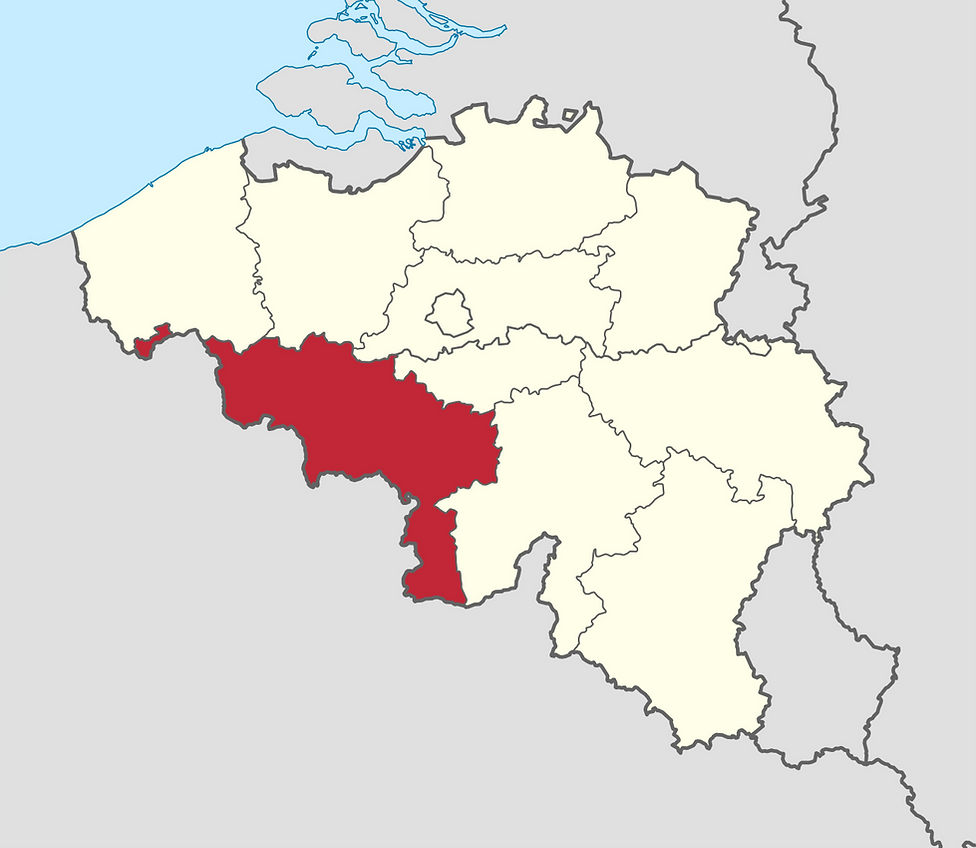
Historic monument and cultural heritage, Bossuit Castle bears witness to the historic heritage of Belgian Flanders and the former territories under French influence. A historic castle in Flanders, it stands within an estate in Belgium whose seigneurial character is still visible today.

Heir to Rococo and Neoclassical influences, Bossuit Castle features several period rooms and authentic decorations that still reflect its architectural evolution. Its 29-hectare English-style landscaped park completes this prestigious heritage setting.
Successive property of the Gruuthuse, Hovine, Luytens, d’Hangrin, and de Beauffort families since 1629, the Bossuit Castle is part of the history of the former territories under French influence and the organization of local lordships, in connection with Avelgem. Built on a former fief belonging to the lordship of Bossuit, of which it was the seat, the site constituted from the 17th century a strategic point in the military context of the reign of Louis XIV (the Sun King), notably during the operations conducted in Flanders and the sieges of Audenarde and Courtrai.
Initially designed as a point of control and defense, the castle progressively evolved during the 18th century into a stately residence. Rebuilt in 1764 at the initiative of Viscount Maximilien-François-Joseph Luytens, according to the plans of the Lille architect Le Saffre, and then transformed in 1867, it presents today a composition blending Regency influences, Louis XV style, and Louis XVI style, in the tradition of French classicism.
Developed over nearly 500 m² of living space, the building retains an interior layout and decors characteristic of the 18th and 19th centuries, notably including decorative ensembles attributed to the painter Piat Sauvage. The 19th-century transformations, led notably by Aimable Désiré Limbourg, were accompanied by a reorganization of the estate and its landscaped park, to which the work of landscape architect Louis Fuchs also contributed.
The whole forms today a coherent estate comprising the castle, its outbuildings — notably former stables and service buildings organized around a courtyard — as well as an orangery built around 1850, presenting an Empire-inspired architecture. The 29-hectare park, designed according to an English-inspired landscape approach, is structured by tree-lined avenues and punctuated by a central body of water.
Recognized as a protected heritage site, the castle and its estate bear witness to a remarkable architectural and historical continuity.
The orangery was notably used as a reception hall during the inauguration of the canal connecting Bossuit to Courtrai, opened towards the mid-19th century, in the presence of Leopold I of Belgium.
The name Bossuit means 'the place of boxwoods'. But this plant name also designates a territory located at the heart of an ancient network: a land structured by lordships, connected by waterways, and integrated for over a thousand years into the dynamics of Flanders, Hainaut, and northern France.
The name Bossuit appears as early as the Middle Ages in forms such as Bussuth (1038), Bossut (1128), or Bousut. It most likely derives from the Latin buxus, meaning 'boxwood', combined with a medieval suffix (-ut, -utus) designating a place.
Bossuit thus means: 'the place of boxwoods', a territory identified, from its origins, by its vegetation.

Bossuit ©Herpoel
In this transition region between the Romance and Germanic worlds, the name evolved under Flemish influence (notably Bossuyt), which explains its current form. A Germanic origin (busk, 'wood') is sometimes mentioned, but remains less precise.
Boxwood, an evergreen and dense plant, offers here a simple yet meaningful reading: that of a stable landscape whose name has endured through the centuries.


.jpg)